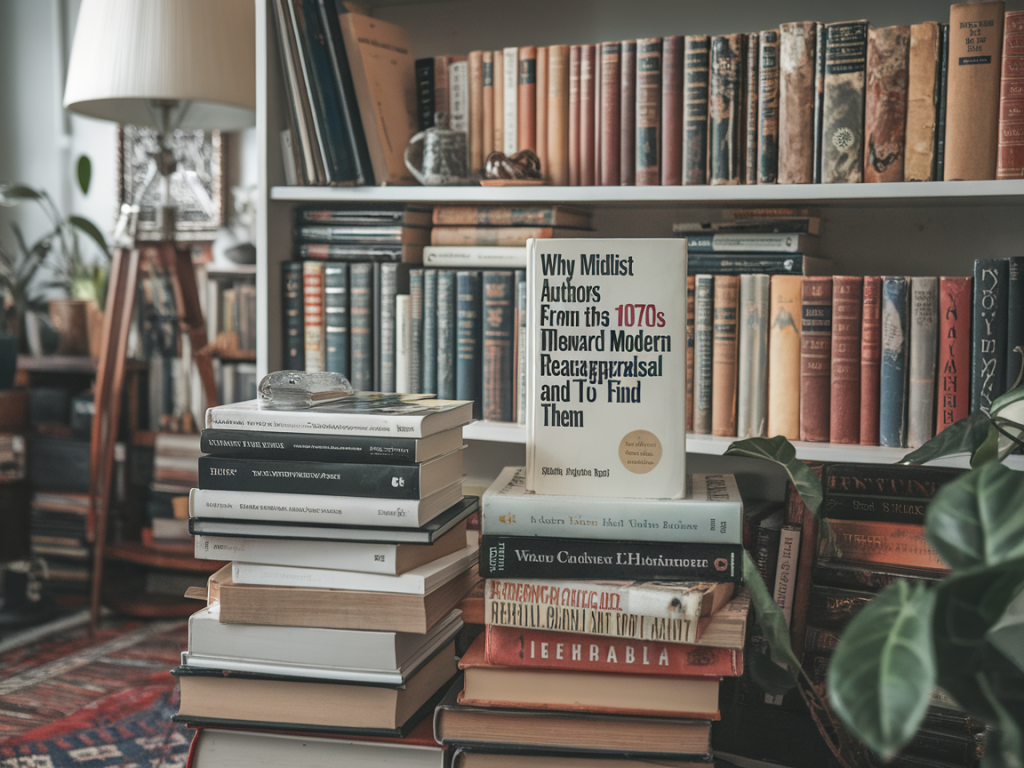
When I first started rooting through the secondhand shelves of a tiny bookshop in Brighton, I kept finding the same thing: novels with dust jackets browned at the edges, author names I recognised from footnotes or literary histories, and blurbs that promised something sharper than the marketing had delivered at the time. These were not the prizewinning giants of the 1970s nor the ephemeral beach reads; they were the midlist authors—writers who enjoyed modest success, steady readerships, and then a slow drift toward obscurity. Revisiting them now, I’ve found surprises in tone, political nuance, and formal experimentation that make a modern reappraisal not just worthwhile but urgent.
Why the 1970s matter
The 1970s are often flattened in cultural memory: images of disco, post-1968 exhaustion, economic crisis and shifting social mores. But for writers the decade offered an unusually porous space. Publishing houses were still willing to take risks on singular voices; small presses emerged; and the literary conversation—about gender, race, class, and narrative form—was shifting. Midlist authors of the period were working within these pressures and openings, producing work that could be formally adventurous without the pressure of instant canonical reward.
What interests me about revisiting these writers is not mere nostalgia. Rather, it’s the opportunity to read a text freed from its contemporary marketing and ideological scaffolding. A midlist novel from 1974 might have been packaged as a domestic drama, but read today it reveals feminist impulses, stylistic daring or a granular engagement with place that speaks directly to current concerns—migration, climate, labour precarity—without ever feeling like a period piece.
How the midlist becomes overlooked
There are several reasons a midlist author drifts away. Publishing churn, changing tastes, and the economics of reissuing plays a part: if a book didn’t sell in large numbers initially, it’s less likely to be reprinted. Academic attention tends to focus on the avant-garde or the canonical, leaving the generous middle ground under-scrutinised. And cultural narratives—what gets taught, adapted, or championed by high-profile critics—create feedback loops that exclude many worthy works.
But absence from bestseller lists or university syllabuses doesn’t equate to irrelevance. I’ve learned to treat omission as an invitation rather than a verdict: it asks the reader to look, listen and assemble context. Often, a midlist author’s work is more attuned to nuance precisely because it wasn’t forced into the high drama of literary fame.
What reappraisal uncovers
Reading these books now, I notice patterns that weren’t visible amid 1970s marketing. A few recurring things I’ve found:
These are not isolated coincidences. What looks like timid middlebrow prose on first glance often contains small radical moves that make a reader stop and rethink. That’s the particular pleasure of the deep read: not a polemical rescue, but a close inspection that lets the work reveal itself.
How to find 1970s midlist authors worth reappraising
There’s no single route, but over the years I’ve developed some practical strategies that combine old-fashioned book-hunting with digital tools.
Using modern tools effectively
Digital search is powerful but requires a light touch. Keyword searching for “1970s fiction” yields noise. Instead try combining date ranges with themes or locations: “1970s Cornwall novel” or “1975 feminist fiction UK”. Visualise patterns using LibraryThing or Goodreads lists: users often create “forgotten books” lists that are goldmines.
| Tool | What it’s good for | Quick tip |
|---|---|---|
| WorldCat | Locating holdings and editions | Filter by language and date; check subject headings |
| AbeBooks | Finding physical copies and first editions | Save searches and set price filters |
| Goodreads / LibraryThing | Community lists, reader tags | Look for user-curated “forgotten fiction” lists |
| JSTOR / Project MUSE | Scholarly context and reviews | Search for contemporary reviews and later citations |
How to read them now
Approach midlist books with curiosity and patience. Don’t demand they answer contemporary theoretical questions head-on; instead, look for gestures and preoccupations. Annotate with an eye to: recurring images, social detail, narrative pacing, and what’s left unsaid. Talking to other readers—a local reading group, an online forum, or a bookseller—can open up unexpected readings.
When I re-read a midlist novel, I often pair it with a contemporary essay or a reissue’s introduction. That layering helps situate the book historically without flattening its present relevance. Publishers like Penguin Classics and Picador’s Modern Classics sometimes rescue midlist authors, but independent presses—And Other Stories, New York Review Books Classics, and small UK reissue lists—are where you’ll find the most adventurous reputational rehabilitation.
Reappraising midlist authors is a kind of detective work that rewards patience. You come away with fewer headline-grabbing names and more of the quiet, persistent pleasures that make reading feel like discovery. The 1970s yield a particular kind of treasure: books that are both of their moment and oddly prophetic, waiting for readers who are willing to read against the grain.