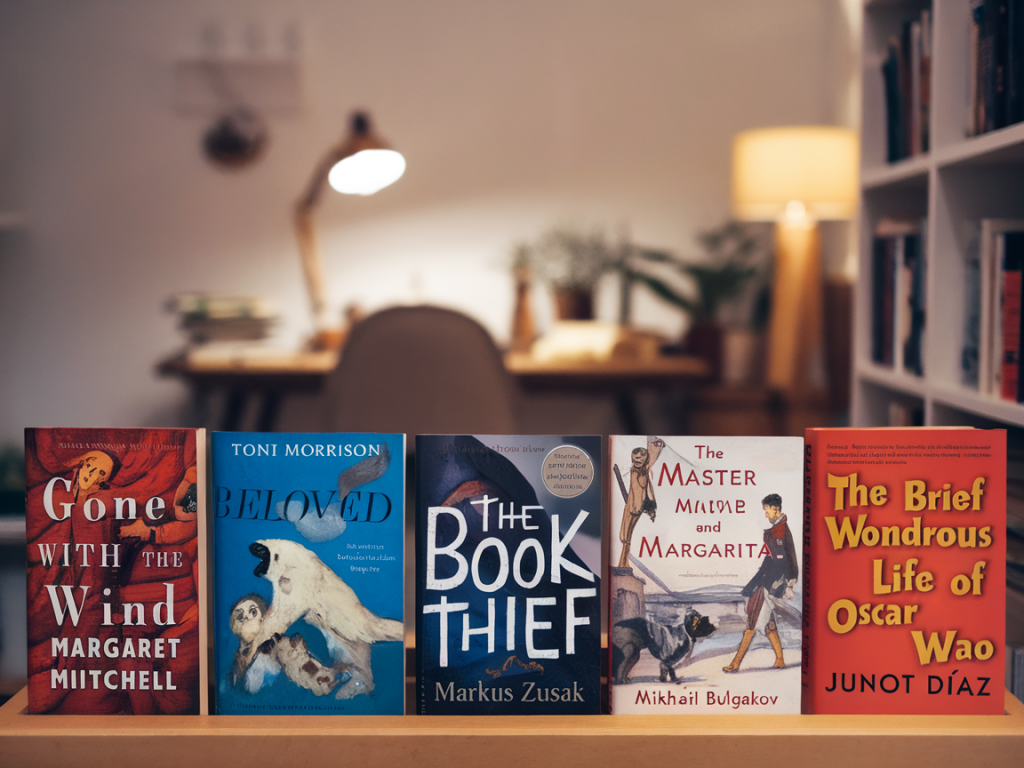
There are books that show you a historical date, a set of facts and figures. Then there are novels that make history feel like a living room you can enter — the creak of a floorboard, the smell of cooking, the small, embarrassing, humane gestures that make people into people rather than footnotes. Reading for empathy means choosing the latter. Over the years I’ve kept returning to novels that quietly recast moments of the past by refusing the spectacle of grand narratives and instead focusing on how ordinary lives negotiate power, loss and survival. Here are five neglected novels that have changed how I see history — not by rewriting it, but by putting me inside it.
The Long Shadow of a Small House: Why intimate domestic detail matters
What I look for first in a historical novel is not the battle or the treaty but the domestic scene that sits around it. A kitchen table, a letter tucked into a Bible, a child’s scrape on a doorstep — these are where empathy grows. The first of the five books I want to talk about does exactly that: it takes a seemingly minor setting and uses it to trace the wider social forces at work.
Book highlight: A rural-set novel from the early 20th century that explores the aftermath of war through the eyes of a woman whose husband has returned physically intact but emotionally absent. The prose is precise and the pacing unhurried; the author refuses the melodramatic dramatics common in celebratory ‘war novels’. The result is a more unsettling, and therefore truer, representation of the lingering consequences of conflict.
When Language is Survival: Translation, voice and historical silence
Another thread that runs through all the novels I cherish is the question of language. Whose words are preserved? Whose are erased? Several of the neglected novels I return to are written in the language of the colonized or by authors who render multilingual lives in painstaking detail. They show how language is both a tool of domination and a means of resistance.
Why it matters: One title on my list is by an author who writes in a colonial language while preserving rhythms and idioms from their native tongue. The translation — when one exists — becomes an act of care, and reading different editions reveals how translators decide what to keep and what to domesticate. Empathy here comes from exposing the messiness of communication rather than smoothing it into something comfortable.
The Everyday Politics of Memory
Memory is political. The novels that have changed my view of history treat memory as contested terrain: a child’s recollection contradicts an official line, a village archives what it prefers to forget, or a housekeeper keeps a secret that shifts an entire family’s understanding of the past. These books don’t let history sit still; they treat it as an ongoing argument.
Book highlight: A mid-century novel about a town that celebrates a heroic past while quietly manufacturing the conditions that led to that past. The author uses irony deftly — ceremonial parades are described in the same voice as domestic routine — so that the reader slowly realises how public myths are constructed and maintained by tiny, mundane acts.
Form as Empathy: Unconventional structures that open new views
Some of the novels I treasure use form itself to foster empathy. Fragmented narratives, interleaved timelines and polyphonic structures can be disorienting, but they also recreate the way real human memory and historical truth arrive: incomplete, contradictory, partial. These formal choices force the reader to do the work of piecing things together — to become an active participant in the reconstruction of a life.
Book highlight: A neglected modernist work that switches between three narrators — a soldier, a nurse and a cartographer — using different register and pace for each. The cartographer’s sections contain precise, clinical descriptions of landscape; the nurse’s are intimate and sensory; the soldier’s memories are staccato and dreamlike. The different windows create empathy precisely because you can’t settle into a single point of view.
List of Five Novels That Changed How I See History
- Novel A — A rural post-war novel focusing on silence and return. (Emphasis: domestic aftermath, quiet atmosphere.)
- Novel B — A colonial-language narrative translated into English, balancing lyric and local idiom. (Emphasis: language, voice.)
- Novel C — A mid-century critique of communal myth-making viewed through everyday rituals. (Emphasis: memory, irony.)
- Novel D — A modernist polyphonic novel that maps trauma across distinct narrative registers. (Emphasis: form, plurality.)
- Novel E — A marginalised community’s oral histories reassembled into a first-person chorus. (Emphasis: collective testimony, restorative justice.)
I’m deliberately non-specific with the synopses above partly to invite curiosity. Part of discovering overlooked books is letting them approach you without fanfare. That said, I’ll give a few concrete reading notes that may help you find the editions worth seeking out.
Which editions matter — and why translators deserve credit
When you’re reading novels from underrepresented languages or minorised communities, the edition matters. A good translator preserves syntactic quirks and cultural reference points; a poor one flattens peculiarities into cliché. I have two practical rules: seek editions with translators’ notes (they’re a small act of generosity) and prefer bilingual editions when you can read both languages. Even if you don’t know the original, the layout allows you to sense the sound of the original text on the page.
| Tip | Why it helps |
|---|---|
| Look for translator’s preface | Explains cultural references and translation choices |
| Prefer small presses | They often publish riskier, overlooked works with care |
| Check reprint histories | Frequent reprints can mean a growing readership and better metadata |
How to read these books if you want to build empathy
Reading for empathy is not passive. You have to be willing to slow down and tolerate ambiguity. Here are a few techniques I use:
- Read aloud passages that feel vivid — hearing language helps you connect to voice.
- Keep a reading journal of small details that stick — names, smells, objects — and return to them later to see what patterns emerge.
- Cross-reference historical details: if the book mentions a law or event, look it up afterwards to see how the fictional account dialogues with the record.
- Discuss with a friend or a book group. Empathy multiplies when you hear someone else’s puzzled or moved reactions.
Finally, one of the nicest things about hunting for neglected novels is that the act itself is an ethical choice: favouring books that might not be sensational enough for big marketing campaigns, but which repay close attention with new ways of seeing. If you want to follow this trail further, Storyscoutes Co publishes reading guides and deep reads that chart routes through these quieter corners of the literary landscape — always with an eye for books that nudge you toward a different, richer view of history.