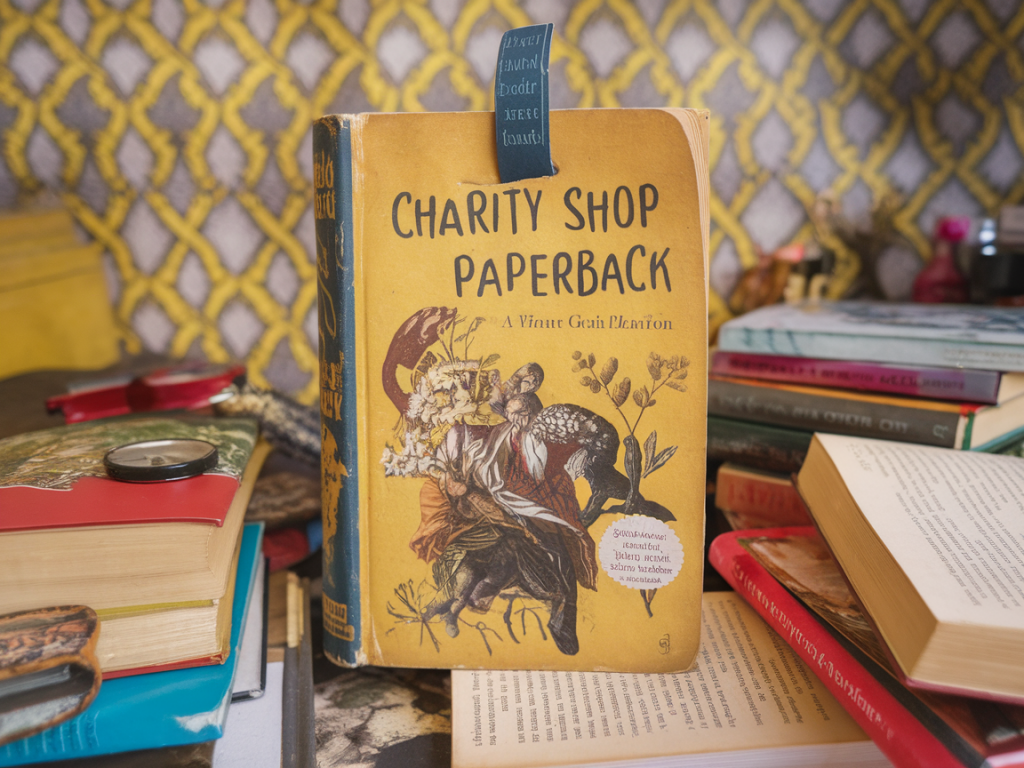
I love the peculiar thrill of finding a paperback in a charity shop that seems to whisper, “take me.” It might be a spine cracked at the wrong place, a dog-eared cover, or simply an author’s name I only half-remember. What I really love is how one small, inexpensive book can become the seed of a whole month-long reading project—a thematic route that transforms the solitary act of reading into a deliberate exploration. Here’s how I turn that charity-shop paperback into a purposeful, surprising month of reading.
Why start from a random paperback?
There’s something generous about beginning with a book that has already lived. A charity-shop paperback carries traces: a faded receipt, a pencilled margin note, the faint scent of other readers’ lives. Starting from chance reminds you that reading needn’t always be curated or celebrity-endorsed. It encourages curiosity and the slow build of meaning—exactly the things I look for in the books I champion at Storyscoutes Co.
Step 1 — Read the found object closely
Before I plan anything, I read the paperback straight through, taking notes as I go. I look for recurring images, motifs, settings, and emotional currents. Even if the book is uneven, it often contains a single shimmer—an obsession with weather, a preoccupation with migration, a habit of naming flowers—that can anchor a wider route.
Make quick marginal notes: one word to describe each chapter, recurring place names, or any striking metaphors. These small observations become the connective tissue for the rest of the month.
Step 2 — Choose your thematic thread
From those close-reading notes, pick a single thread that feels rich enough to sustain several books. Good examples I’ve used in the past include:
- Displacement and home: a character keeps moving, never settling; homes are described as fragile or temporary.
- Gardens and wildness: plants, gardens, or botanical language recur, offering a sensory anchor.
- Small-town secrets: gossip, history and silences in a closed community.
- Food and memory: recipes, shared meals or sensory descriptions of cooking as a way to access the past.
Pick a theme that excites you. It should be specific enough to give structure, but elastic enough to allow for diverse voices and formats—novels, memoir, poetry, essays, even a play or two.
Step 3 — Curate the month
I plan the month as four weekly segments plus a few “wildcards.” Each week has a primary book and a short complementary piece. A typical layout looks like this:
| Week | Primary reading | Complement |
|---|---|---|
| Week 1 | Found paperback (re-read with focus) | Short essay or poem that resonates |
| Week 2 | A novel that picks up the theme from another angle | Interview with the author or a translator |
| Week 3 | A non-fiction account (memoir, history) | Podcast episode or documentary clip |
| Week 4 | A surprising or marginalized voice (different era or language) | Short story or archival text |
“Wildcards” could be a cookbook that illustrates food-memory links, a children’s book that reframes grown-up themes, or an artist’s monograph if visual motifs mattered in the paperback.
Step 4 — Hunting for companion texts
Here’s my favourite part: treasure-hunting. I use a mix of sources to find complementary reads:
- Library catalogues: Great for older or out-of-print regional books.
- Secondhand online sellers: AbeBooks and Alibris are good for obscure titles; eBay can turn up delightful editions.
- Local bookshop staff picks: Independent bookstores often stock unexpected titles—ask the staff for “books about X” and you’ll get recommendations that algorithms miss.
- Anthologies and journals: They’re perfect for short-form complements—poems, essays, or an overlooked short story.
- Podcasts and radio: Episodes from BBC Radio 4, The New Yorker, or local literary podcasts can function as accessible week-long complements.
Don’t be afraid to include translations or small-press publishers—these are often where the quiet revelations live.
Step 5 — Make reading performative
To turn a solitary month into something more playful, add small rituals. These don’t require an audience—just a way to mark your progress.
- Keep a route journal — a dedicated notebook where you paste clippings, jot one-sentence reactions, and note favorite lines.
- Choose a playlist that matches the theme. For gardens, I’ll pick gentle folktronica; for displacement, a mix of diasporic artists.
- Cook one dish inspired by a book each week. Food anchors memory and helps the theme live in your body as well as your mind.
- Set one evening for themed conversation—invite a friend to read a short piece and meet in person or online to compare notes.
Step 6 — Keep the route flexible
One of the advantages of starting with a found paperback is the permission to change your mind. If week two’s book doesn’t land, replace it with a compact collection or a podcast episode. The aim is discovery, not completion.
Step 7 — Make notes you’ll return to
At the end of each week, I write a short paragraph that captures what the week taught me about the theme. These paragraphs become the scaffolding for a longer essay—or an occasional blog post for Storyscoutes Co—about how the route unfolded. Over time you’ll build a surprising archive of micro-essays that map your reading life.
Example routes from my own shelves
To make this concrete, here are two mini-examples based on real charity-shop finds I’ve turned into month-long routes:
- Found paperback: A 1970s domestic novel obsessed with the scent of cut grass.
- Week 1: Re-read the paperback and collect botanical images.
- Week 2: A contemporary nature-deficit memoir.
- Week 3: A collection of plant poems from a translated poet.
- Week 4: A regional novel where a garden becomes a site of political memory.
- Found paperback: A cheaply printed travelogue from the 1980s about emigrants in a Midlands town.
- Week 1: Close read, mapping places and language use.
- Week 2: A modern migrant memoir offering a counter-narrative.
- Week 3: A short-story collection by a regional writer from a different generation.
- Week 4: Essays on urban change and local histories.
How to share (or not)
Some months I keep the route private—my own slow commune with pages. Other times I share extracts on social media, or write a short newsletter piece that pairs two favourite quotes. If you want to invite others in, host a one-off online meeting (60 minutes) to discuss one piece you loved and one you didn’t. The goal is to encourage curiosity, not to perform expertise.
Turning a charity-shop paperback into a month-long reading route is a way of practicing attention. It trains you to notice patterns, to follow the surprising threads between books, and to celebrate the small thrill of discovery. If you try it, I’d love to hear about the paperback that started your route and the unexpected book that ended it—there are always more little treasures waiting on the shelf.