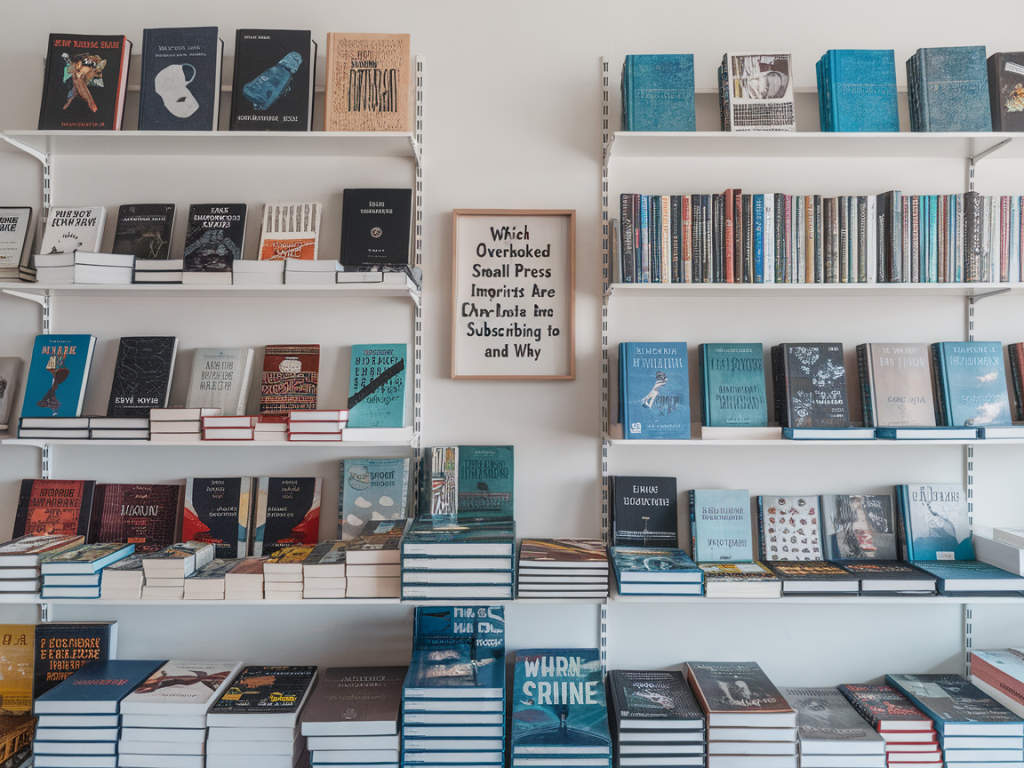
I’m often asked which small-press imprints are worth subscribing to—whether you mean a literal subscription that lands a book through your letterbox, a membership that unlocks special editions and pre-orders, or simply following a press so closely that you buy everything they publish. Over the years I’ve learned that the presses I return to are the ones that combine clear taste, thoughtful curation and a readiness to take risks on voices the mainstream has overlooked. Below I run through a handful of imprints I’d recommend watching (and signing up to) and why their subscription or membership offers are genuinely rewarding for curious readers.
What makes a small-press subscription worth it?
Before naming names, a quick note on what I look for when I subscribe to a small press:
- Curation: Does the press have a distinct editorial identity? A subscription should feel like joining a small, trusted bookshop of one.
- Exclusivity without elitism: Limited editions and special covers are lovely, but the press should also make its work accessible—clear pricing, reasonable shipping, transparent subscription terms.
- A willingness to translate and diversify: I value presses that bring work from different languages, geographies and forms into English.
- Extras that matter: author Q&As, essays, reading guides, and community events make a subscription more than a parcel; it becomes an invitation to think with others.
- Reliability: small doesn’t mean chaotic. Timely shipments, clear communication and professional production are essentials.
Peirene Press — perfect for novella lovers
I subscribe to Peirene because they have turned the novella into a gentle, curated ritual. Their seasonal boxes and subscription options focus on contemporary European novellas in translation—short, intense books that are ideal for repeating readings. The press pairs each book with an essay and often commissions new translations, which is a huge plus for readers who want to explore beyond anglophone fiction.
Why subscribe: you receive a carefully chosen set of short European works, usually with essays or contextual material. It’s excellent value if you savour translations and compact narratives that linger.
And Other Stories — the short fiction miners
And Other Stories runs subscription models and a loyal readership because they champion short fiction—collections and standalone novellas—with an international bent. They publish writers you might otherwise miss: lesser-known voices with assured craft. Their boxed sets and subscriber discounts make it easy to build a focused, adventurous library.
Why subscribe: consistent, high-quality short fiction (often translated), and occasional subscriber-only editions or curator notes that help you get deeper into each book.
Galvanised Books — a punchy, contemporary pick
Galvanised Books (to use the galvanised-books example you had in mind) has earned attention for energetic, contemporary titles—often debut or second books—that feel urgent and relevant. If you enjoy discovering new writers who are doing something a little bit brash and new, subscribing to their newsletter or membership list is a smart move: you’ll hear about limited runs, special edits and live events before the wider world.
Why subscribe: early access to small print runs and a front-row seat to launches; great if you like being among the first to champion a new voice.
Tilted Axis — indispensable for contemporary Asian literature
Tilted Axis is a model of how a small, mission-driven press can transform a corner of the literary map. Co-founded to champion contemporary Asian literature in English translation, their titles are exacting, brave and often unlike anything else in your local bookstore. They’ve sometimes offered subscriber options or supported memberships; more than that, following them allows you to pre-order and support translation projects at the ground level.
Why subscribe: you’ll get access to world literature that refocuses your sense of style, politics and narrative possibility—and you directly support the long, expensive work of translation.
Charco Press — Iberian and Latin American discoveries
If you’re chasing contemporary fiction from Spain and Latin America in bold new translations, Charco Press is one of the most exciting labels right now. Their publications include both established talents and daring newcomers; they often have pre-order campaigns through which subscribers can secure unique editions or discounts.
Why subscribe: a steady stream of lively, contemporary voices from the Iberian and Latin American spheres, frequently translated with care.
Galley Beggar Press and Fitzcarraldo Editions — risk-takers with reputations
These two UK-based houses have become synonymous with daring, well-produced literary books. Galley Beggar often publishes work that challenges form and content; Fitzcarraldo has an eye for translated literature and ambitious long-form novels. Neither is tiny in the absolute sense, but both run loyalty programmes or mailing lists that offer early access and discounts, and both have an editorial clarity that makes subscribing feel like joining a discerning readership.
Why subscribe: for readers who want to midwife their own sense of a modern canon—books that are likely to be discussed and to influence other writers.
Deep Vellum and Graywolf — cross-Atlantic, dependable choices
Deep Vellum (US) and Graywolf (US) both have subscription or patronage-friendly structures and publish translations and original work that consistently reward attention. Graywolf’s sponsorship and donation schemes support their mission and sometimes offer subscriber perks, while Deep Vellum’s membership helps fund ambitious translation projects.
Why subscribe: dependable, adventurous lists and the knowledge that your money supports translation and editorial work that might otherwise be hard to fund.
How to choose the right imprint to subscribe to
Here’s a simple process I use when deciding where to put my support:
- Read a sample: many presses post extracts or essays—read one before you commit.
- Check formats and shipping: special editions are fun, but check shipping prices and timelines for your country.
- Decide what you want: do you want surprises (subscription boxes) or the freedom to choose each title (membership discounts and early access)?
- Look for transparency: presses that explain print runs, translator pay and editorial goals earn my trust.
- Join the mailing list first: you’ll often get a trial of the press’s voice and a sense of the kinds of extras they offer subscribers.
Subscriptions vs memberships vs following closely
Not every press runs a formal subscription box, but many have memberships, patron tiers or loyalty discounts. Subscriptions (you receive a book or box on a schedule) are great if you love surprise and steady consumption. Memberships (discounts, early access, newsletters and occasional exclusives) are better if you’d rather choose each title but still want to support the press. And sometimes the best move is to follow closely—join their mailing list, come to a launch, pre-order a daring title. All of these are ways of signalling support and staying on the inside track.
Finally, a practical tip: set aside a small annual 'press fund'—I budget for one or two small-press subscriptions a year and use that to try new houses. It’s a joyful habit: you end up with books you wouldn’t have discovered otherwise, and you help keep editorial risk alive in publishing.