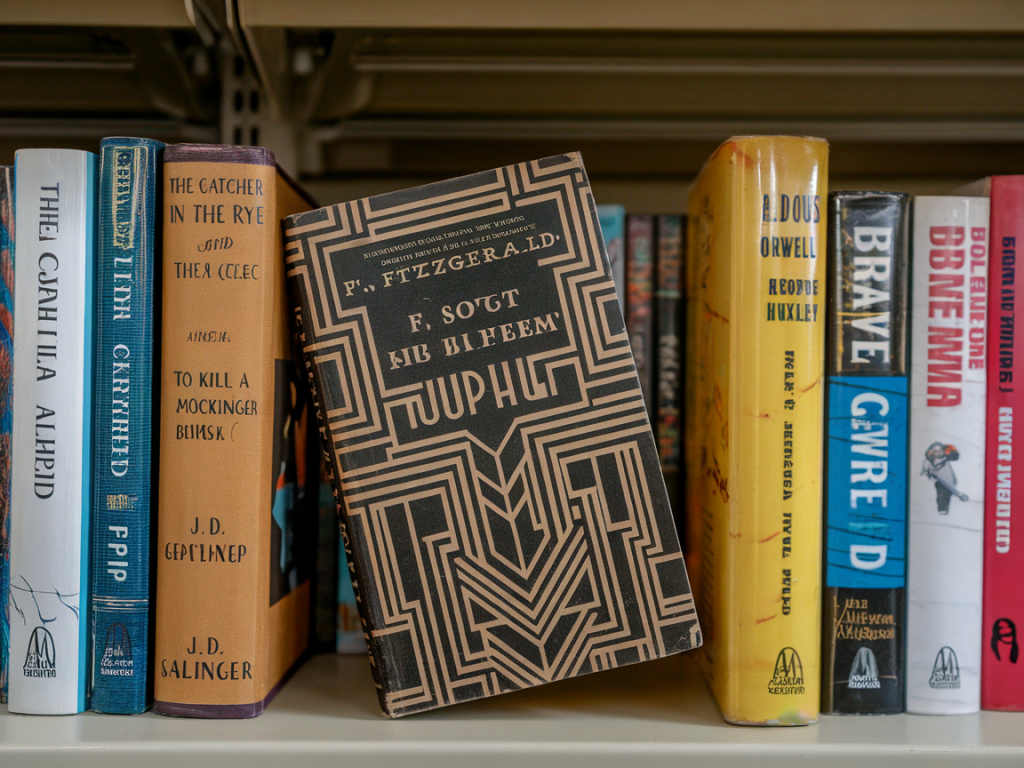
I found the paperback by accident — wedged spine-out between a gardening manual and a book on urban planning, its stickered price peeking like a small, mischievous flag. It was mis-shelved, the kind of discovery that makes a bookseller’s heart lurch: the cover art gave nothing away and the blurb was a careful, unflashy thing. I bought it because I love being guided toward stories that didn’t expect to be found.
That mis-shelved paperback became the seed of a five-book reading route I built for a quiet week of train journeys and late-night reading. If you like the idea of letting a single oddball find determine a mini-canon — one with thematic echoes, narrative contrasts and surprising diversions — this is a method you can use. It’s part scavenger-hunt, part curatorial practice, and entirely about letting curiosity lead the way.
Why start from a mis-shelved book?
There’s something revealing in a book that isn’t where it’s “supposed” to be. Mis-shelved books often end up outside marketing neatness, away from the bestseller pile and the algorithm’s glow. They’re more likely to surprise you. Starting from one such book forces you to read horizontally rather than vertically — to follow associations rather than titles arranged by sales figures. The result is a route that feels personal, serendipitous and, often, more rewarding.
Step 1: Read the book closely for themes and textures
Begin with an attentive read. Don’t just note the plot — notice tone, recurring images, the book’s emotional register and any small preoccupations. Ask yourself: what haunts this book? Is it a preoccupation with memory, with place, with marginal lives, with eco-anxiety, with domestic comedy? What sensory details recur — food, weather, dress? These are the threads you’ll pull to find other books.
I keep a small notebook (a Moleskine or a cheap A5 one will do) and jot down a handful of keywords, any striking quotations, and a line or two about the book’s “mood.” For the paperback that started my route, my notes read: “quiet anger; suburban maps; family myths; late-spring heat.”
Step 2: Identify primary and secondary threads
From your notes, choose one primary thread and two secondary threads. The primary thread will be the spine of your five-book route — the thematic through-line that each selection will touch in some way. The secondary threads provide texture: they allow you to incorporate contrasts and tonal variety.
For example:
- Primary thread: family secrets and memory
- Secondary thread A: unsettled place (suburbs as liminal space)
- Secondary thread B: small acts of resistance
Step 3: Choose your five-book architecture
I like to think of the five books as a short set: an opening piece that resonates closely with your seed book, a second that deepens or complicates the theme, a third that takes a deliberate detour, a fourth that returns in a new register, and a finale that reframes everything.
Here’s a template you can follow:
| Slot | Function | What to look for |
|---|---|---|
| Book 1 | Close kin | Similar mood/setting or a direct thematic echo |
| Book 2 | Deepen | Explores the primary thread in greater complexity |
| Book 3 | Detour | Contrasts in form, place or voice — keeps the route lively |
| Book 4 | Return | Reflects the seed book with shifted perspective |
| Book 5 | Reframe | Offers closure or an unsettling coda that makes you rethink earlier reads |
Step 4: Where to find the other four books
Now comes the fun part: hunting. Mix online tools with analogue searching.
- Bookseller instincts: if you’re in a bookshop, ask a staff member. Say what you liked in the seed book — sometimes an older colleague will point you to a title that isn’t on the screen but lives in their knowledge.
- Catalogues and bibliographies: WorldCat and your public library catalogue are invaluable for following references and seeing what sits near a particular author on shelves in other libraries.
- Recommendation platforms: Goodreads lists, LibraryThing, and curated newsletters (I subscribe to a few indie presses and newsletters like The Paris Review Daily or And Other Stories) can suggest unexpected pairings.
- Author networks: look at who the author reads or cites. A footnote, an afterword, or an interview can be a direct line to another book that shares that same sensibility.
- Social listening: I’ll sometimes search Instagram or Twitter for a quoted line — readers often tag the lines they love and that leads to companion titles.
Step 5: Assemble concrete suggestions — an example route
Here is a hypothetical route built from a mis-shelved suburban novella whose central image was a neglected garden. The keywords were family memory, suburbia, quiet rebellion, and seasonal detail.
- Book 1 (Close kin): a contemporary novella that centres on family reunions and the slow reveal of a secret, with similar domestic heat and precise botanical details.
- Book 2 (Deepen): a longer, more complex novel set in a suburban town that examines generational memory over decades.
- Book 3 (Detour): a short story collection focused on small acts of resistance in urban spaces — sharper, punchier, and formally different to keep cadence fresh.
- Book 4 (Return): a translated work that revisits the theme of landscape and memory but through another culture’s suburban architecture — it adds perspective and strangeness.
- Book 5 (Reframe): a lyrical, borderline-genre book (perhaps magical realism or speculative) that reframes the domestic secrets as part of a wider, almost mythic pattern.
For each slot I pick two contenders and let reading mood decide. I also put easier, shorter reads in slots 1 and 3 to avoid fatigue.
Practical reading and pacing tips
Plan a loose schedule. Five books can be a lot in a short period; balance intensity. Pair a heavier book with a lighter one. I often read a dense novel in the morning and a short story or novella in the evening. Keep a running note of connections as you read — little epiphanies made while commuting often become the most interesting links.
Use tags on Goodreads or a private note to track which thread each book speaks to. I tag mine with the primary and secondary threads so that, later, I can see how many times “memory” or “place” recurred across the route.
Make it your own
This method is flexible. If your mis-shelved book is non-fiction, build a route around a set of essays or reportage; if it’s poetry, let the route gather poems and lyric prose. The important part is letting the first book be a permission slip — it gives you a reason to read sideways.
If you want, send me the title of your mis-shelved find via the contact page on Storyscoutes Co and I’ll suggest a three-title mini-route to get you started. I love the odd juxtapositions that emerge when you read with a single, surprising book as your north star.