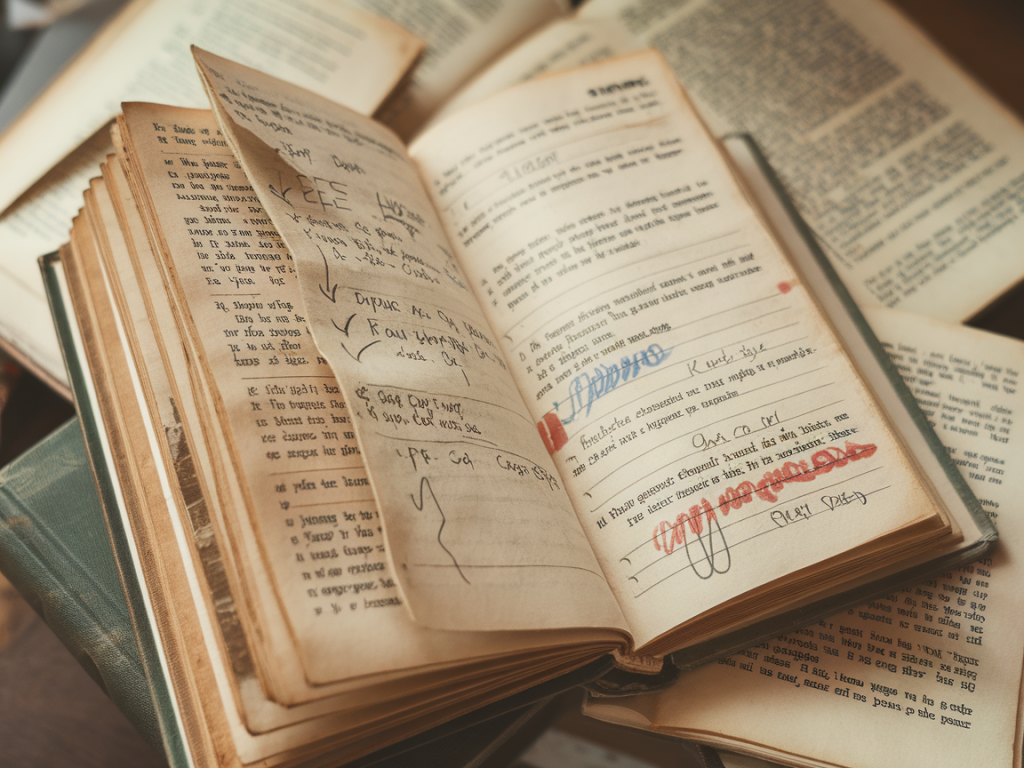
When I pull a secondhand book from a shelf and find handwriting in the margins, I feel the particular kind of curiosity that made me fall in love with bookshops in the first place. Marginalia—the underlinings, exclamation marks, date-stamped notes, grocery lists stuck between pages—can transform a book from a solitary text into a palimpsest of readers. It’s not merely graffiti; it’s a trace of someone thinking, reacting, being moved or bored or irked. In this piece I want to think aloud about what marginalia actually tells us about a reader’s experience: what it reveals, what it obscures, and how to read those traces with empathy and care.
What counts as marginalia?
Most people picture marginalia as neat pencil annotations or enthusiastic exclamation points. That’s part of it. Marginalia can include:
- Underlining and bracketing
- Short notes in the margins—reactions, definitions, or translations
- Symbols: question marks, stars, arrows, or personal shorthand
- Interleaved ephemera: receipts, pressed flowers, train tickets
- Full-page letters or reflections addressed to the self—or to another reader
- Smudges, coffee rings and fingerprints
Each of these marks is an *event*: someone stopped while reading and acted. The act is often impulsive, practical and intimate.
First impressions: mood and engagement
The simplest thing marginalia tells you is whether a reader was engaged. Dense underlining and regular comments usually signal a reader who wanted to hold onto ideas—either to remember, to argue with, or to teach. Sparse marks suggest different uses: a book skimmed, or one read for pleasure rather than study.
But engagement comes in flavours. A book peppered with question marks may indicate confusion or curiosity; exclamation marks can mean delight, outrage or an attempt to ordinally catalogue memorable passages. A margin full of doodles might suggest distraction, or that the book accompanied the reader through long hours of waiting. None of these are definitive, but they are clues.
What handwriting reveals—and what it hides
Handwriting can convey age, pace and personality. A hurried, cramped script implies reading on the run; a deliberate, neat hand suggests study. Frequent marginalia in a particular colour of ink can hint at when notes were made—blue-black today, faded brown decades earlier.
Yet handwriting is also misleading. A careful script doesn’t always equal a careful reader. Sometimes readers who write neatly are trying to impose order on a chaotic reaction. Other times, messy annotations belong to someone with firm ideas. We should resist treating handwriting like a personality test and instead see it as context.
Patterns of use: how readers inhabit a book
Different readers inhabit books differently, and marginalia maps these patterns:
- The scholar: abundant cross-references, dates, names, and perhaps a citation style. These books were likely teaching tools or research companions.
- The diarist: personal reflections, diary dates, and letters to self. The margin becomes a private archive.
- The annotator-for-fun: underlining favourite lines, adding hearts or jokes—reading as intimate company.
- The practical user: shopping lists or addresses tucked into pages—books as life objects.
- The reluctant reader: a few tired marks or marginal notations of “boring”—someone dutifully finishing a text.
These archetypes are, of course, porous. A single book can pass through multiple hands and accumulate varied mark-making: a 19th-century owner’s pencilled translations, a post-war student’s inked notes, a 1990s commuter’s coffee stain. That layered history is part of the appeal.
Temporal clues and social history
Dates written in a book are small historical anchors. They tell us when a text mattered enough to provoke a marginal note. A book annotated during wartime, for instance, may show how readers sought solace or instruction. Language and references matter too: abbreviations, slang, or references to contemporary events can place a reader in a particular social moment.
Ephemera such as railway tickets, class schedules, family photographs or concert stubs deepen that context. I’ve found postcards from places that suggested a book left home with someone on a particular journey; ticket stubs have turned ordinary novels into companions of specific nights out.
Learning to read marginalia: a small guide
If you want to learn from marginalia—whether for pleasure or research—try these modest practices:
- Read the book first. Don’t let annotations precondition your response.
- Note the tools: pencil vs ink, colour, and pressure. They help date and characterise the notes.
- Look for cumulative patterns: repeated symbols or recurring themes are more telling than single exclamations.
- Respect privacy. Some notes may be personal; consider whether it’s appropriate to echo them publicly.
- Preserve delicate annotations. Archival sleeves or acid-free paper protect both book and notes.
When marginalia becomes part of value
In the rarefied world of rare books, certain annotations increase value. A copy annotated by a famous writer or a historically important owner—Virginia Woolf’s marginalia, Nabokov’s pencil notes, or Charles Darwin’s corrections—can transform a book into an artefact. But most marginalia affects value differently: sometimes lowering market price because it is seen as a defect; sometimes raising interest because it adds narrative.
For independent sellers and collectors, the conversation often turns on provenance. A dog-eared, annotated copy of a midlist novel might become a compelling object because its marginalia tells a human story. For bookstores like the ones I’ve worked in, such copies can be sold as ‘well-loved’ or ‘annotated by a passionate reader’, which attracts a certain kind of buyer.
Digital marginalia and the future of annotated reading
Our reading environments are changing. Kindle highlights, Hypothesis annotations and social reading platforms create new forms of marginalia—digital, often public, and searchable. These traces have different dynamics: they can be aggregated, compared and mined for patterns, but they can also lack the tactile intimacy of a handwritten note.
That tension intrigues me. A pencil underline on a falling-apart Penguin has a different resonance from a highlighted sentence on an e-reader synced to the cloud. Both tell stories of readers, but in different registers: one private, sometimes accidental; the other networked, deliberate and persistent.
Ethics of reading other peoples’ notes
There is a small ethical question: is reading someone else’s marginalia intrusive? I believe it depends on intent. A note scrawled on a public pamphlet or a donated library book arrives as a fragment of public history. A personal diary entry slipped into a novel feels more private. When in doubt, read with humility. Treat notes as conversation starters rather than confessions to be exposed.
When I write about marginalia for Storyscoutes Co, I try to foreground curiosity without prurience. The joy comes from recognising shared responses to literature: surprise, disagreement, laughter, boredom. Marginalia reminds us that books are not inert; they are lived-with, argued-with, and sometimes used as shorthand for life.