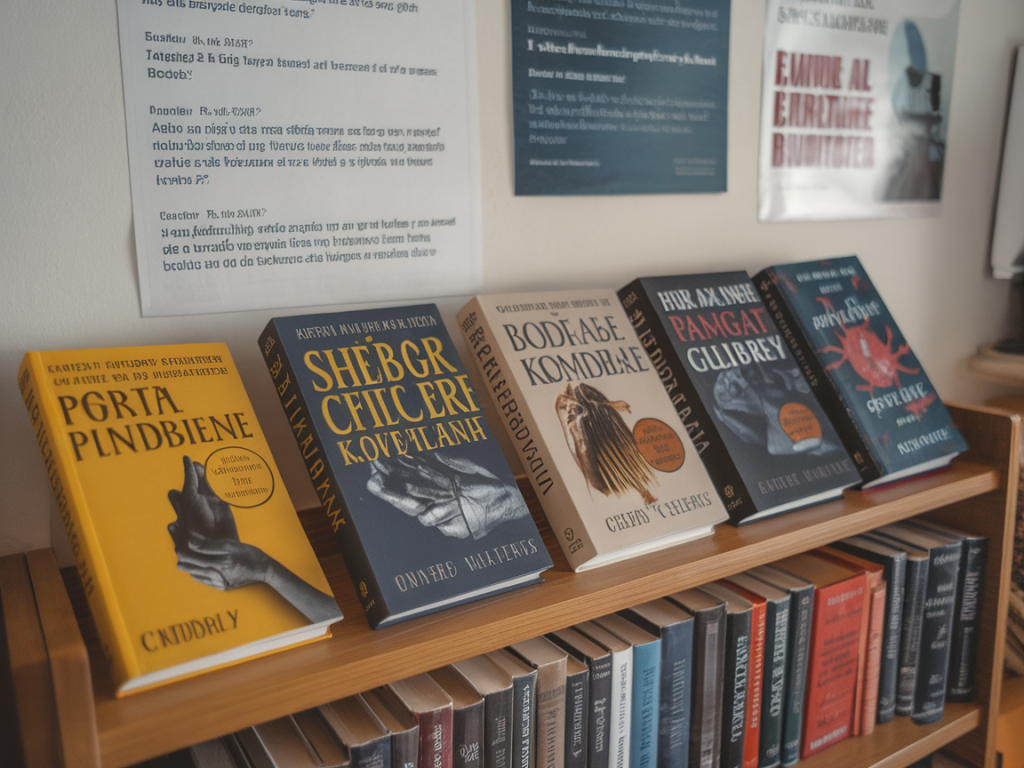
It happens to me quite often: I want to read a foreign-language book that several translators have brought into English, and the internet is full of passionate, contradictory advice. One critic praises a new edition for its "faithful" rendering; a blurb on the paperback calls another translation "luminous." Reviewers talk about "domestication" and "foreignising" as if there's a single right answer. Choosing between translations starts to feel less like a literary decision and more like arbitrating a family argument.
Over the years I've developed a small toolkit to help me decide—which I’m thrilled to share here, because it’s not just about picking the most fashionable name or the latest prize-winner. It’s about matching the translation to what you want from the book. Translators are readers, writers and interpreters all at once; their choices shape voice, rhythm, humor and gravitas. Some translations aim to disappear; others want to make you acutely aware you’re in another language. Both approaches are legitimate, but they will offer very different reading experiences.
Why multiple translations can feel so different
Translators make hundreds of micro-decisions: how to render idioms, whether to keep cultural references, how literal a sentence should be, what rhythm to impose. Those decisions are guided by philosophical choices (stay close to the original vs. create a smooth English text), by the translator’s ear for English prose, and by the publisher’s brief. Even the era when a translation was made matters: a 1950s translation may feel stiff or quaint today, while a contemporary version could be bolder with syntax and slang.
Different translations can therefore emphasise different aspects of the same book. One might foreground lyrical language, another the plot speed, another the humour. So the first thing I ask myself is: what do I want most from this book?
Ask yourself what you want from the reading
- Authenticity and strangeness — Do you want to feel the foreignness of the original? Choose a translation that preserves cultural specificities, unusual syntax or odd rhythms.
- Fluency and ease — Do you want to glide through the narrative, focusing on story rather than language quirks? A domesticated, idiomatic translation might suit you.
- Poetry and craft — Are you reading for prose style, sentence-level beauty or the author's voice? Look for translators known for literary sensitivity and attention to rhythm.
- Accuracy for study — If you’re reading for coursework or close analysis, you may prefer a translation that errs on the side of literalness, or one that includes explanatory notes.
Practical steps I use before deciding
Here is my step-by-step approach. You don’t need to follow every item on the list every time—pick the ones that fit your appetite and the resources available.
- Read a page or two in each translation. This is the most decisive move. Many online previews (Google Books, publishers' sites, Amazon "Look Inside") let you compare the opening pages. The voice will reveal itself quickly: formal or chatty, clipped or expansive, bright or sombre.
- Check the translator’s notes and preface. Translators who explain their approach show where they’ve taken liberties. If someone is explicit about modernization, cultural substitution, or heavy annotation, that tells you what you’re buying.
- Look at the paratext. Editions differ: some include helpful footnotes, glossaries, introductions by scholars that add context; others present the text with minimal intervention. Academic readers may value annotations, while pleasure-readers may prefer no prefaces to avoid spoilers.
- Research the translator’s body of work. A translator who’s done many similar authors—say, contemporary Arabic fiction or early modern Scandinavian literature—will bring relevant instincts. Names like Richard Pevear and Larissa Volokhonsky (for Russian classics) or Lydia Davis (for short, exacting prose) are reliable signposts, but don't let the name alone decide things.
- Read targeted reviews, not blurbs. Blurbs sell books; reviews explain choices. Look for longer-form reviews in literary outlets (London Review of Books, The New Yorker, The Paris Review, The TLS) that analyse translation strategy. Critics often point out whether a translation smooths out the author's difficulties or preserves awkwardness strategically.
- Ask a community. I’ve found bookshops, local reading groups and online forums (Reddit’s r/translator, Twitter threads, Goodreads groups) useful. People will often tell you whether a translation captures humour, dialect, or cultural nuance—things a blurb won’t mention.
- Consider an audiobook. Different translations sound different aloud. If the audiobook is available, listen to a sample: cadence, sentence length and dialogue are audible clues to how the translator handled the text.
- Check the publication date and revision history. Some older translations have been revised to modernize awkward phrasing or to improve fidelity. Others are historically interesting—Virginia Woolf's translations of Woolf-era style might charm some readers, while others prefer a newer voice.
How I compare translations at a glance
When I’m choosing quickly, I create a simple comparison table in my notes. Here’s a template I use; you can adapt it to your needs.
| Edition | Voice (formal/informal) | Fluency vs. literalness | Paratext (notes/intro) | Notable strengths |
|---|---|---|---|---|
| Translator A (Publisher, Year) | e.g. formal | more literal | extensive notes | faithful to idioms, good for study |
| Translator B (Publisher, Year) | e.g. colloquial | idiomatic, fluid | short intro | lively, reads like contemporary English |
When critics and blurbs disagree — how I weigh them
I treat blurbs as marketing and reviews as conversation. If critics disagree, I look at their priorities: is the critic praising faithfulness or prose energy? Do they value historical fidelity or readability? Critics often reveal their own reading values, and those may or may not match mine. I also pay attention to what they emphasize: voice, humor, cultural detail, or cadence. Match that emphasis to what you want.
Another tactic: follow the one translation that multiple readers with similar tastes to yours recommend. If you like close, academic readings, prefer the translation praised by scholars; if you like vibrancy and readability, trust readers who praise accessible, idiomatic versions.
When in doubt, borrow or buy secondhand
If I can, I borrow editions from the library or a local independent bookshop—one of the pleasures of working with real books is being able to open several versions at once. If buying, I often purchase a secondhand copy of an alternative translation so I can compare them on my own terms. Some books are deeply rewarding precisely because multiple translations illuminate different facets of the original.
Choosing a translation should feel less like crossing a finish line and more like picking a companion for the journey. Translations are interpretative acts; each one offers a distinct meeting with the author. Once you’ve matched your reading goals to a translator’s aims—and sampled the prose—you’ll have a far more confident, and ultimately enjoyable, reading experience.