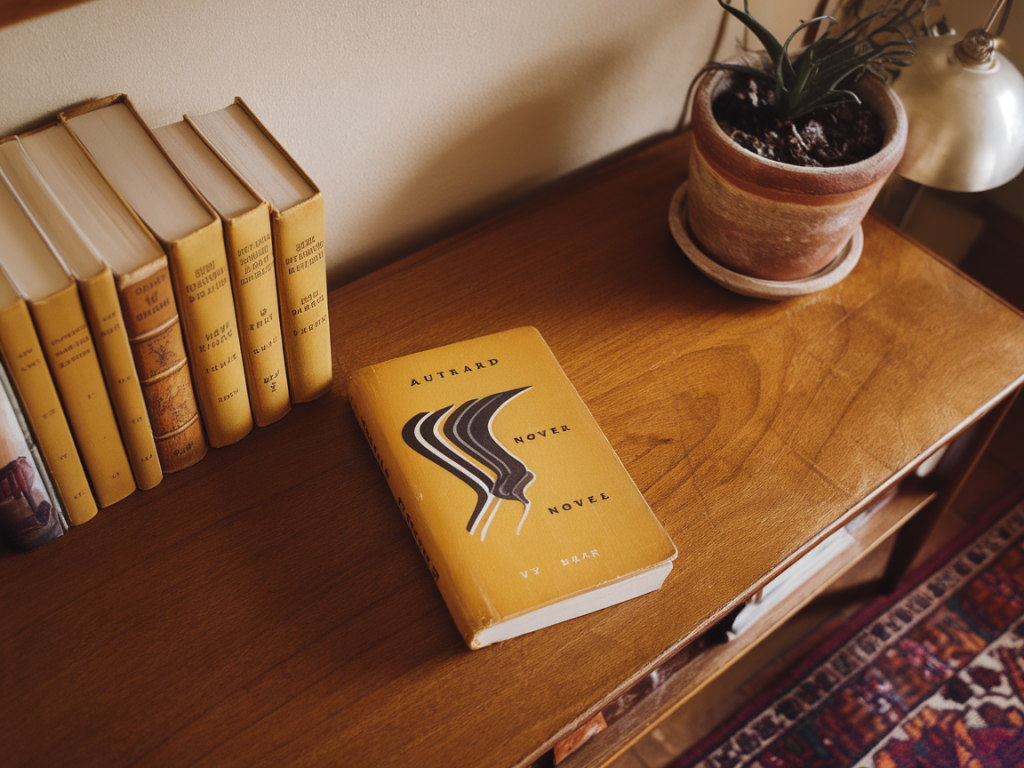
It started with a cramped spine, yellowing edges and a library stamp that suggested my copy had been shuffled into the wrong shelf decades ago. That misfiled mid-century novel—part domestic portrait, part social satire, written by a doubly overlooked woman novelist—felt like the kind of book that wanted company. I wanted to watch it unfold not as a one-off read but as the axis for a slow, six-week rediscovery route: each week a new perspective, a small research project, a poem, an essay or a companion fiction to bring out the book’s hidden resonances. If you like wandering slowly through a book’s textures, contexts and daring relatives, here is a working method I use when I turn one forgotten book into a sustained reading route.
Why a rediscovery route?
Rediscovery is not simply praise; it’s curiosity in action. A single misfiled novel can be a doorway into a cultural moment, a neglected voice, a set of formal experiments or a network of overlooked peers. Stretching the encounter across six weeks gives the time to notice odd phrasing, to follow a thread into an essay, to hear the echoes in a poem, to argue with a review from the period. It also makes room for pleasure: the leisurely kind of reading that lets you return to a sentence and feel it open.
Week-by-week blueprint
Below is a flexible framework I use. Adapt it to the book you’ve found and to the tempo you like—some readers may prefer a two-week sprint, others will stretch this into a season.
Spend the week wholly with the novel. Read slowly, annotate, and keep a reading journal. Note the voice, recurring images, the novel’s rhythms, and where it resists you. Ask simple but illuminating questions: whose point of view is centered? What is left unsaid? Which sentences do you want to copy out? This week is about intimacy: make a map of the novel’s structure (chapters, recurring scenes, patterns of time).
Now widen out. Look for contemporary reviews, author interviews, and promotional material. Newspaper archives (The Times, The Guardian, regional press) and digitised magazines can be revealing. If the book is mid-century, try sources like The New Statesman, The Listener or period literary supplements. Read one or two reviews from the moment of publication and note what critics attended to—and what they missed.
Select another mid-century novel—preferably one that was better-known or remained in the canon—and read it alongside the misfiled book. The contrast will sharpen both books’ strengths and limitations. You might pick a canonical title (for instance, a well-known domestic novel from the same decade) or another overlooked contemporary to create a chorus rather than a duel.
Mid-century fiction often shares close ground with poetry and non-fiction of its time. Read a handful of poems, a manifesto, or a personal essay that echoes the novel’s concerns—urban alienation, gender roles, the aftermath of war. These short forms can illuminate tone and lyric strategies that novels bury.
Hunt for any scholarly work, dissertations, or blog essays referencing your novel or its author. If there’s little, that’s a story in itself: archival absence speaks to the mechanisms of literary memory. If you can, check library catalogues for the author’s papers or correspondence. Even a brief mention in an archive can change how you see a book.
Return to the novel with all the accumulated context. Re-read key chapters and write a short piece—a review, an essay, or even a reading guide for a friend. If you’re part of a book group, offer to lead a discussion or host a small online salon. The best rediscovery routes end by putting the book back into circulation.
Practical tools and sources I use
I keep a small toolkit that makes this slow work manageable:
Sample six-week reading list (for a fictional mid-century novel titled “The Quiet Window”)
| Week | Activity | Example texts |
| 1 | Close read | The Quiet Window (your copy), reading journal entries |
| 2 | Period reviews | Contemporary reviews from The Listener, The Manchester Guardian |
| 3 | Peer novel | “The Long Afternoon” (a canonical mid-century domestic novel) |
| 4 | Poetry detour | Selected poems by Philip Larkin or Elizabeth Jennings |
| 5 | Archive hunt | Author mentions in publisher’s catalogue; local archive notes |
| 6 | Re-read and write | Reading note, blog post or mini-lecture |
Discussion prompts and journal prompts
How to find a misfiled book (and how to keep it ethical)
“Misfiled” can mean a physical book tucked in the wrong shelf, an under-recommended title in a secondhand shop, or a digital out-of-print novel waiting on a used-books site. I start with charity shops, indie bookshop remainder tables and the less-categorised corners of university libraries. Digital friends: abebooks, old copies on Amazon Marketplace, and the Important Booksellers on eBay are worth checking.
When sourcing, be mindful of rights and fair pricing. If a book is rare and prices are high, consider requesting an inter-library loan or checking for digitised versions before paying collectors’ rates. If the book is out of print but has a living author or estate, a polite email requesting permission to quote or reproduce a passage is always welcome.
Taking the route public
If you want to share the route, put together a short reading guide (one page) with weekly goals, a handful of links to sources, and a reading playlist—music can sensitise mood; I often pick radio dramas from the era or a handful of chamber pieces that echo the novel’s atmosphere. Post it to a blog, a book club forum or a site like Instagram with weekly updates. A slow route is an invitation: you’ll be helping others discover a book that might otherwise slip back into the stacks.