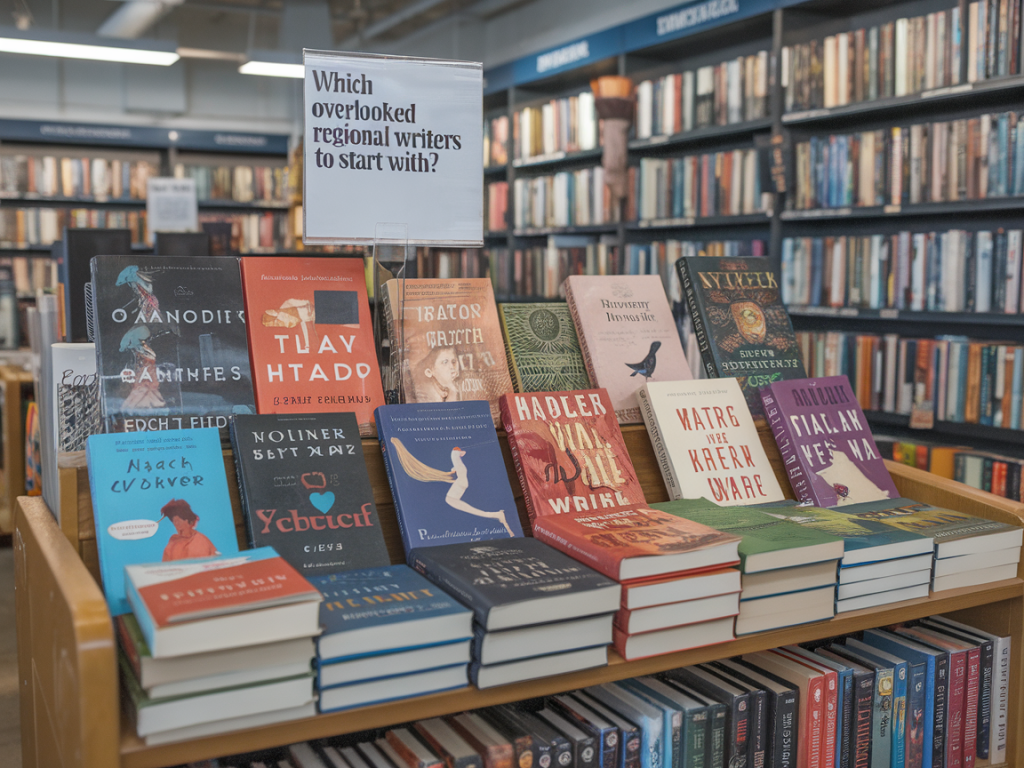
I have a small ritual that helps me steady the year: every season I assemble what I call a “discovery shelf”—a deliberately imperfect selection of books by overlooked regional women writers. The aim isn’t to make a canon or to be exhaustive; it’s to create a changing micro-library that invites curiosity, conversation and slow reading. Below I share which regional women writers I often return to, why they matter, and practical, playful ways to curate your own seasonal discovery shelf at home or in a reading group.
Why regional women writers?
Regional writing is not merely about geography. It is about a writer’s attention to a place’s rhythms: weather, local speech, grazed memory, economies and the private ways people adapt. Women’s regional perspectives are especially rewarding because they often foreground domestic labour, kinship ties, unglamorous economies, and forms of resilience that mainstream “national” narratives overlook.
When a writer is both a woman and rooted in a particular place, you often get a combination of sharp observation, intimate scale, and a politics of survival. The result can be startlingly fresh even when the books are decades old—precisely the reason Storyscoutes exists.
Some overlooked regional women writers to start with (and what to expect)
- Barbara Comyns (England) — Comyns writes in short, uncanny sentences about provincial life: marriage, failed aspirations, and the particular absurdities of class. Start with The Vet’s Daughter for a slender, haunting introduction.
- Mary Webb (Shropshire, England) — Think pastoral intensity with a modernist pulse. Webb’s novels pulse with weather and soil; Precious Bane is a fierce, compassionate read, full of local dialect and mythic undertones.
- Jean Rhys (Dominica / England) — Although better known now, Rhys’s Caribbean-inflected modernism still surprises. Wide Sargasso Sea refracts colonial landscapes through intimate dislocation.
- Bessie Head (Botswana) — Head’s fiction and short stories register the scars of displacement, migration and the tensions of postcolonial borderlands. Try A Question of Power or the luminous short story “Life and Times of Michael K” (noting the political and personal striations in her work).
- Zora Neale Hurston (Florida, USA) — Hurston is a brilliant ethnographer-novelist whose regional focus—Black life in the American South and Florida—combines folklore, dialect and anthropological curiosity. Their Eyes Were Watching God is essential, but her lesser-read essays and short stories repay attention.
- Maria Edgeworth (Ireland) — A Georgian writer whose regional portraits of Irish life complicate simplistic historical readings. Her sketches and novellas are full of local dispute and social detail.
- Janet Frame (New Zealand) — Frame’s precise, liminal prose captures provincial New Zealand with acute psychological insight. Start with her short stories or Owls Do Cry for luminous, unsettling prose.
How to choose books for a seasonal discovery shelf
When I curate a shelf I aim for contrast and conversation. Here’s how I pick:
- Pick a place and an angle: You might choose “coastal writers,” “upland women,” or “diasporic writers rooted in small towns.” Narrowing your theme helps you find unexpected links.
- Mix lengths and forms: A novel, a short story collection, a memoir, and one essay or travel piece. Shorter works are essential for busy months—people are more likely to sample.
- Include a recent reissue or translation: New introductions often give invaluable context. Small presses like Persephone, Dalkey Archive, and Peirene frequently reprint neglected women writers with excellent notes.
- Balance the familiar and the strange: Put one name that rings a bell beside two you don’t know. The familiar acts as a bridge.
Curating by season: a simple table to guide you
| Season | Mood/Focus | Example picks |
|---|---|---|
| Spring | Renewal, itinerancy, landscapes coming to life | Mary Webb — Precious Bane; Jean Rhys — selected stories; a local nature essay by a lesser-known writer |
| Summer | Heat, coastal rhythms, complex leisure | Jean Rhys — Wide Sargasso Sea; Zora Neale Hurston — short stories; a translated seaside novel |
| Autumn | Harvest, decline, memory | Barbara Comyns — The Vet’s Daughter; Janet Frame — short fiction; local memoir |
| Winter | Containment, interior lives, small communities | Bessie Head — A Question of Power; Maria Edgeworth — selected novellas; a rural gothic novella |
Practical styling and notes cards
I like to give each book a small handwritten card—just a sentence or two: context, a trigger warning if needed, a line to read aloud. These cards transform the shelf into a guided experience. Examples of short cards:
- "Mary Webb — earth, weather, quietly fierce female protagonist."
- "Bessie Head — postcolonial Botswana, political interiority; may be intense."
- "Zora Neale Hurston — folklore and vernacular language. Read aloud!"
Display tips:
- Face one or two books out so they catch the eye.
- Use natural materials—twine, a small sprig of dried heather or a pebble—to reference place.
- Rotate a “book of the month” and pin a sticky note with a guide question: e.g., “How does place shape desire in this novel?”
Ways to invite readers in
A discovery shelf is at its best when it becomes a social object. Here are quick ideas I’ve used in bookshops and at home:
- Leave a small notebook beside the shelf and invite readers to scribble a line they loved. Over a season you build a communal reading trail.
- Host a short “shelf salon”: 45 minutes, tea, one passage read aloud and five minutes of reflections. Keep it intimate and curiosity-led.
- Create a seasonal playlist that matches the mood of your shelf—folk tracks for upland moors, local radio recordings for coastal shelves.
Small presses, reissues and where to start hunting
Small presses do a lot of the heavy lifting when it comes to rediscovery. Persephone Books, Virago (their Modern Classics series), Dalkey Archive, and New York Review Books are reliable places to look. Libraries are also treasure troves—ask your librarian for regional writers’ lists or local historical society publications. I often remind readers: buying a secondhand copy from a local independent bookshop is a way of making the discovery communal.
Finally, be merciful to yourself. A discovery shelf is not a syllabus to finish—it's a provocation, a set of doorways. Keep it near a favourite chair, make a pot of tea, and let the season do the rest.