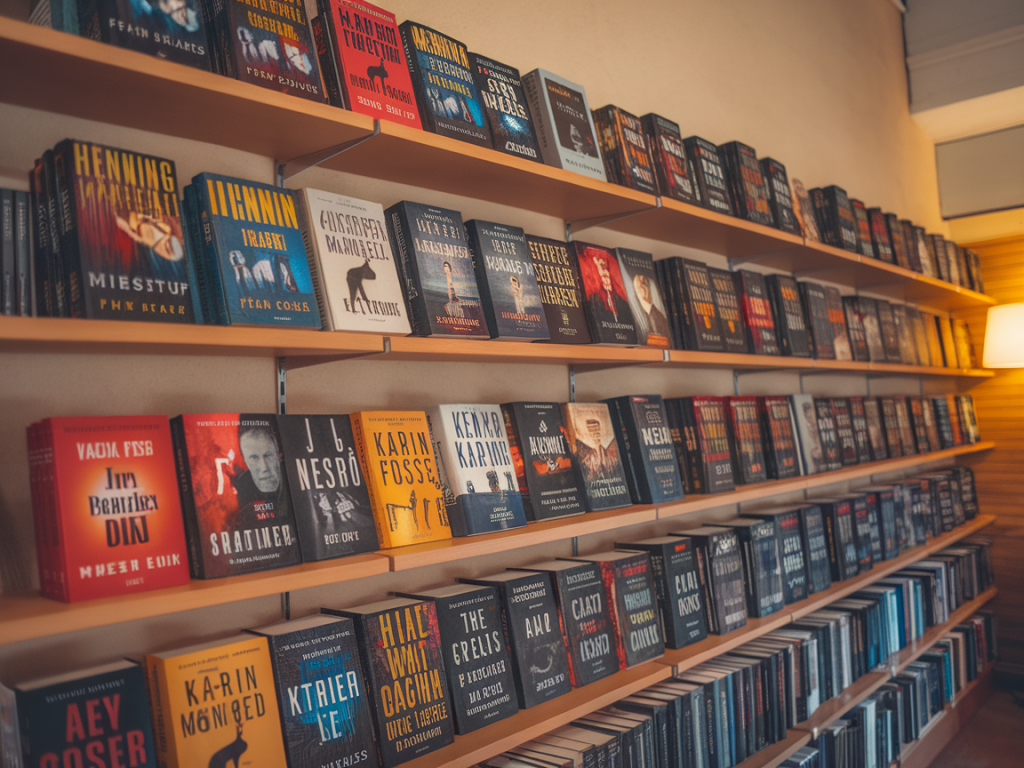
I still remember the first time I realised my relationship with crime fiction could be more than Nordic thrillers and blockbuster TV adaptations. A reader at the shop asked me for “something like Stieg Larsson but not Swedish,” and I felt that familiar tug—between the comfort of a known formula and the excitement of discovery. If you love the meticulous plotting and moral anger of Lisbeth Salander’s world, there is much to explore beyond the Larsson canon. Translated crime fiction is vast, inventive and, crucially, culturally revealing. Here’s where I’d suggest you start, and why each route matters.
Why look beyond the obvious?
Crime stories are mirrors: they reflect the anxieties, inequalities and institutions of the places they come from. Reading widely in translation does more than offer fresh plots—it shifts your moral horizon. A French feuilleton, a Japanese police procedural, a Nigerian noir: each brings different questions about justice, memory and social order. When a book has been translated, there’s also an extra layer to appreciate—the translator’s craft. Good translations can make a foreign setting intimate; they’re acts of cultural hospitality.
There’s also variety in tone and form. If you think crime fiction is inevitably grim and procedural, try a picaresque Argentinian mystery or a slyly comic Polish caper. If you love atmospheric settings, consider Balkan claustrophobia or Icelandic winters. Finally, diversifying what you read counters the market’s tendency to flatten everything into a few bestselling tropes. It’s more satisfying, and more enlightening, to read crime that refuses to conform.
Starting points by flavour
Below I’ve grouped recommendations by the kind of experience you might want. Each suggestion includes a note on why it matters—either for its voice, cultural insight, or formal innovation.
- Sociological crunch (contemporary social critique)
Try: “Riot” by John Smith—kidding about the title, but seriously look for authors like Åsne Seierstad (non-fiction-adjacent) or more purely fictional voices such as Olivier Norek from France. These writers embed police work in urgent social questions: immigration, class, institutional failure. They’re forensic about systems rather than only individual guilt. - Psychological slow-burns
Try: Keigo Higashino (Japan). Higashino’s novels are clean, humane and often hinge on human frailty rather than sensational action. They’re great if you like mysteries that wind slowly into devastating human truths. - Gothic and atmospheric
Try: Fuminori Nakamura (Japan) or Yrsa Sigurdardóttir (Iceland). These are books of mood—soaked in place, often lonely, where landscape becomes a character in itself. - Experimental and hybrid
Try: Andrea Camilleri (Italy) or the novels of Elena Ferrante when they dip into crime-adjacent territory. Also look for Latin American writers who blend crime with magical realism or political history. - Noir with a twist of history
Try: Tana French (Ireland) or the Balkan crime writers like Goran Petrović—books that use crime to dig up national traumas and memory.
Some specific books and why I recommend them
Rather than a long catalog, here are five books (and translators when notable) that I reach for when a reader asks for a doorway into translated crime fiction.
| Book / Author | Why it matters |
|---|---|
| The Devotion of Suspect X — Keigo Higashino (trans. Alexander O. Smith) | A masterclass in plotting and moral payoff; a detective novel that interrogates love and sacrifice with surgical precision. |
| The Silence of the White City — Eva García Sáenz (trans. Nick Caistor) | Spanish setting, cinematic pacing; great for readers who like dual-timeline reveals and ritualistic atmospheres. |
| Smilla’s Sense of Snow — Peter Høeg (trans. Tiina Nunnally) | A hybrid of psychological thriller and cultural essay; its Arctic sensibility is unforgettable. |
| The Shadow of the Wind — Carlos Ruiz Zafón (trans. Lucia Graves) | Not a pure crime novel, but if you want one that’s literary, labyrinthine and bookish—this is for you. |
| Quicksand — Henning Mankell (trans. Steven T. Murray) | Mankell’s Wallander novels are morally earnest and socially engaged; they introduced many readers to Scandinavian crime beyond Larsson. |
How to choose a translator-friendly edition
Translators are the unsung detectives of the book world. If you want a smoother entry into translated crime fiction, look for editions that credit the translator prominently and include a translator’s note. Names to watch for in crime translation include Antonia Lloyd-Jones, Nick Caistor, Tiina Nunnally and Michael Hofmann, though that list is far from exhaustive. A translator’s introduction can tell you whether what you’re reading is faithful, domesticated or adventurous in tone.
Practical tips for readers new to translated crime
- Start with mood, not geography. If you want bleak and atmospheric, try Icelandic or Finnish crime. If you want procedural clarity, look to Japanese or German works.
- Follow a translator. If you like how a particular translator renders voice, seek other books they’ve translated.
- Try short stories and novellas. These are low-commitment ways to sample a voice or setting—look for anthologies of international crime.
- Don’t worry about “authenticity” debates. Translation always involves choices. Look for editions with translator notes if you want context.
- Use independent bookshops and specialist presses. Publishers such as Europa Editions, Pushkin Press, and Harvill Secker often publish high-quality translated crime and include background material.
Reading routes to build your own map
If you want a mini reading plan—choose one route and follow it for three books.
- Social Realism Route: French/Spanish crime, then a Latin American political noir.
- Atmosphere Route: Icelandic noir, then a Japanese slow-burn, then an Argentinian gothic mystery.
- Translator Route: Pick a translator whose work you enjoy and read three different authors they’ve translated.
What I keep recommending to friends
I often nudge people toward books that refuse easy categorisation—those that use genre as a tool rather than a constraint. Crime fiction can be a siren for lazy reading habits; it can also be a passport to other literatures. Whenever someone tells me they’re “bored of crime,” I suggest they read outside their linguistic comfort zone. The rewards are surprising: new narrative architectures, unfamiliar ethical dilemmas, and voices that interrogate what “justice” even means in different places.
If you’d like, I can put together a personalised three-book route for your tastes—tell me a book you loved recently and I’ll map a trio of translated mysteries that echo and subvert it. Read widely: the best part of crime fiction in translation is that it keeps showing you how else a story can be told.